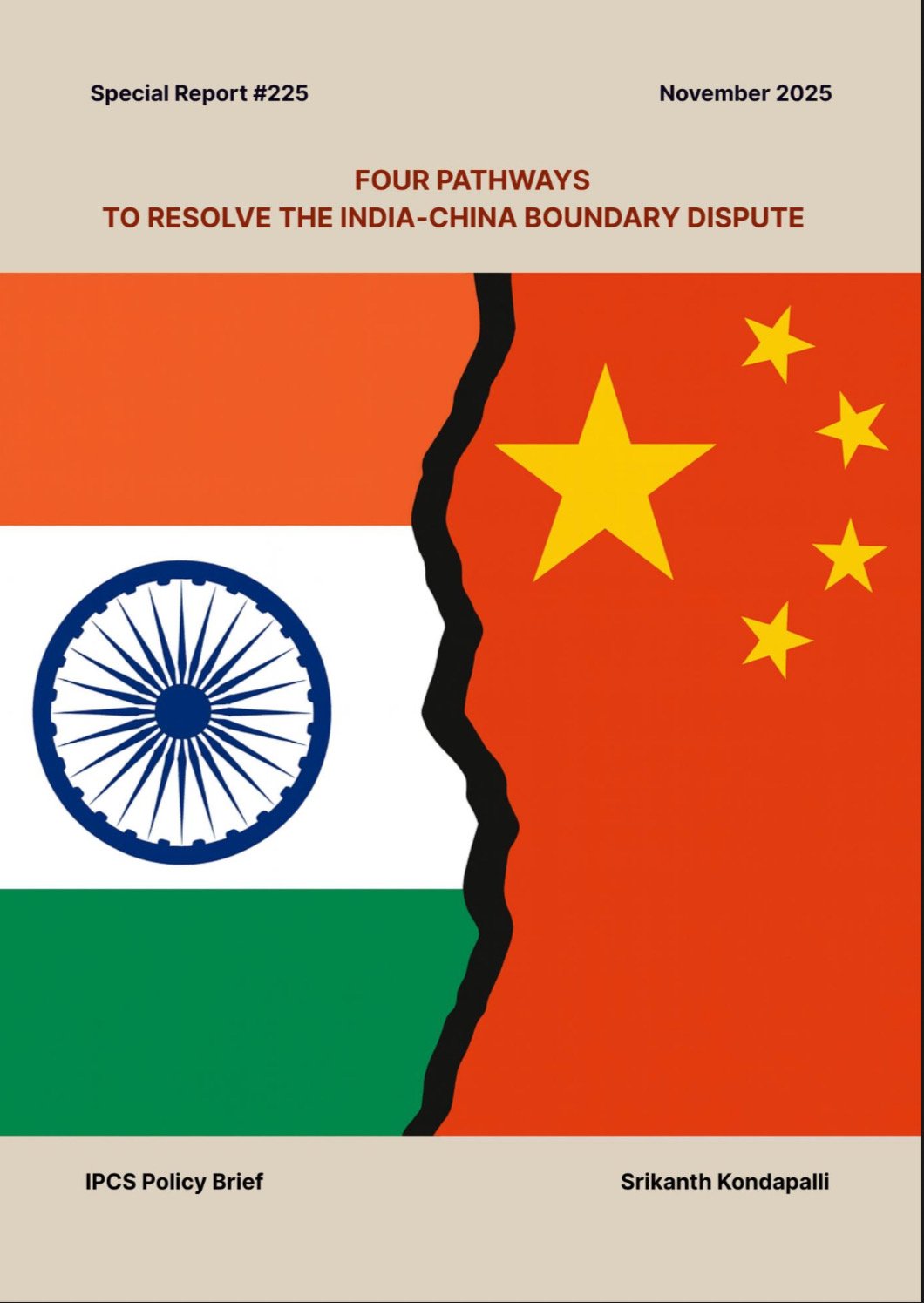
Four Pathways to Resolve the India-China Boundary Dispute
Srikanth Kondapalli · 16 Dec, 2025 · 225 · Special Report
The 24th Special Representative (SR) meeting on the boundary dispute in August 2025 between Indian National Security Advisor Ajit Doval and Chinese Minister of Foreign Affairs Wang Yi rekindled prospects for the issue’s resolution. Several new ideas were proposed,2 including delimitation, ‘early harvest’, a working and an expert group, renewed efforts at border management, Corps commanders’ meetings in all the three sectors of the boundary (in addition to the previous one in the western sector), and reopening of border trade routes at Nathu La, Shipki La, and Lipulekh.
Despite this rare window of opportunity, the boundary question is characterised by significant baggage: a complex dispute, history of failed proposals, competing territorial claims, and an environment of deepening geopolitical tensions. Together, these factors suggest that progress will depend on coordinated political decisions, credible confidence-building measures, and agreement on one of four pathways identified in this Policy Brief by Professor Srikanth Kondapalli:
1. Early harvest and incremental delimitation
2. Reaching a grand political bargain
3. Recognising the Line of Actual Control as international boundary
4. Mutual and equal security arrangements.
The choices that India and China make will determine whether the 24th SR meeting becomes a turning point or another missed opportunity in a four-decade effort to resolve the boundary question.
Read More