IPCS on COVID-19
Click on the image for a complete list of all IPCS publications on COVID-19...
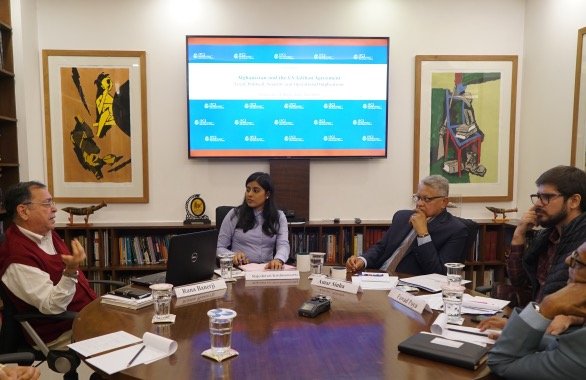
IPCS Discussion | Afghanistan and the US-Taliban Agreement: Legal, Political, Security and Operational Implications
Rana Banerji, Amb (Retd) Amar Sinha, and Fawad Poya in conversation at IPCS to discuss the multi-dim...
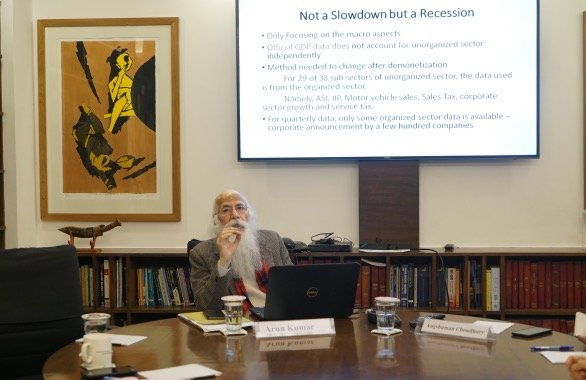
IPCS Discussion | State of the Indian Economy: Budget 2020 and Beyond
Professor Arun Kumar, Malcolm S. Adiseshiah Chair Professor, Institute of Social Sciences, New Delhi...

IPCS Discussion | Modern Policing and the Concept of Authority: An Empirical Consideration of a Philosophical Question
Ms Sundari Nanda, Special Commissioner of Police (Vigilance), Delhi Police, in conversation at IPCS...
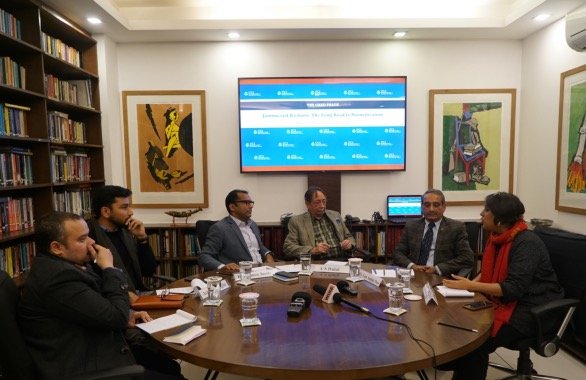
The Chao Track Policy Round-table | 'Jammu and Kashmir: The Long Road to Normalisation'
Panellists in conversation at IPCS on the Chao Track PRT to discuss the road to normalisation in Jam...
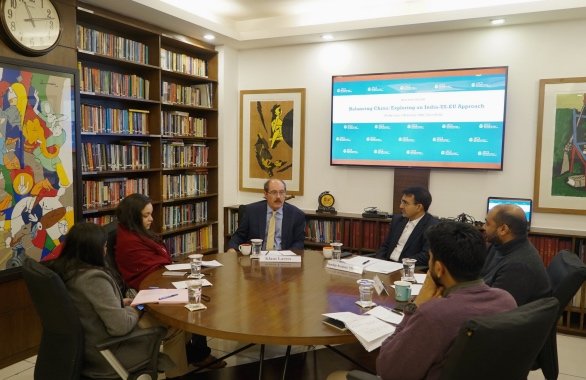
IPCS Discussion | Balancing China: Exploring an India-US-EU Approach
Prof Klaus Larres, Dr. Sandip Kumar Mishra, and Abhijit Iyer-Mitra in conversation at IPCS...
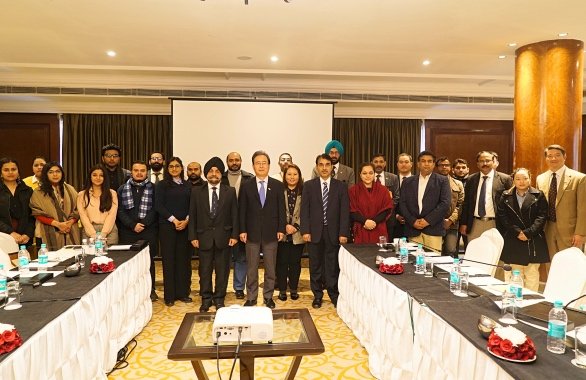
Synergising Security Cooperation between India and the Republic of Korea
On 19 December 2019, IPCS and the Embassy of the Republic of Korea in India jointly hosted a round-t...

IPCS Discussion | Five Years of India's Act East Policy
Amb (Retd) Rajiv Bhatia, Prof Amita Batra, Dr Uday Bhanu Singh, and Ashutosh Nagda review the politi...
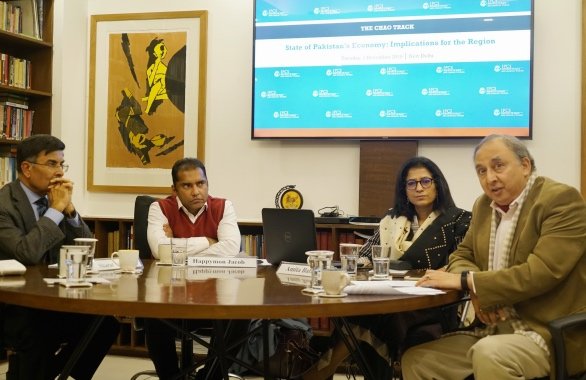
The Chao Track Policy Round Table | 'State of Pakistan’s Economy: Implications for the Region'
Panelists in conversation at IPCS on The Chao Track PRT to discuss the state of Pakistan's economy a...
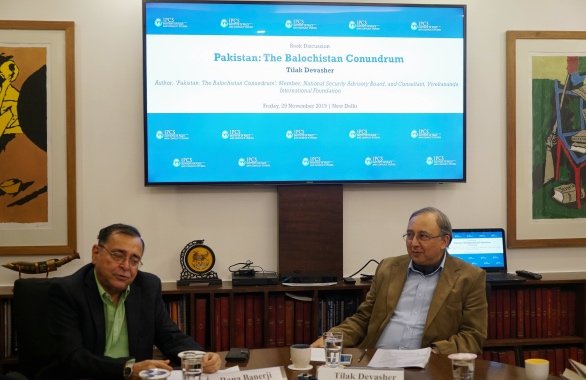
Book Discussion | 'Pakistan: The Balochistan Conundrum'
Author Tilak Devasher in conversation at IPCS on his latest book. The interaction was chaired by Ran...
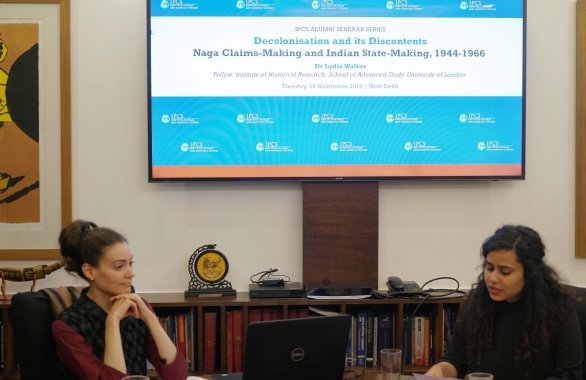
IPCS Discussion | 'Decolonisation and its Discontents: Naga Claims-Making and the Indian State-Making, 1944-1966'
Dr Lydia Walker, Past & Present Fellow, Institute of Historical Research, School of Advanced Study, ...
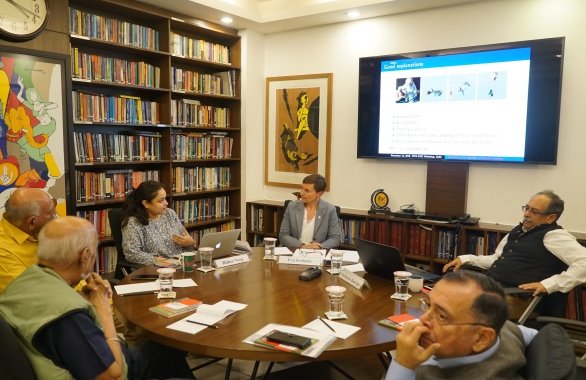
IPCS Discussion | Autonomous Weapons and the Ethics of Human Responsibility
Eva Svodoba, Deputy Director, International Law and Policy, ICRC, Geneva, and Professor Subhashis Ba...

One Hundred Homes: A Visual Survey of India
Dr Jeffrey Hammer, Member, IPCS Governing Council, and formerly professor of economic development at...
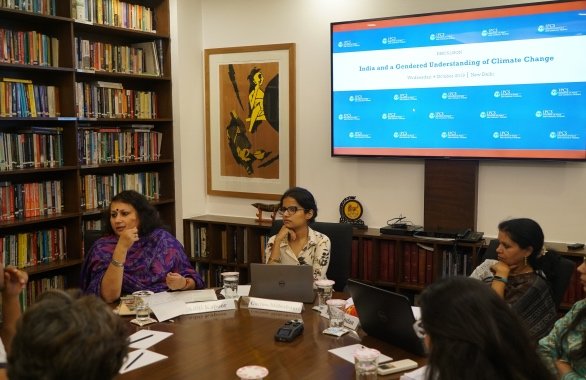
IPCS Discussion | India and a Gendered Understanding of Climate Change
Dr Mini Govindan, Aditi Kapoor and Garima Maheshwari, in conversation at IPCS to discuss the gendere...
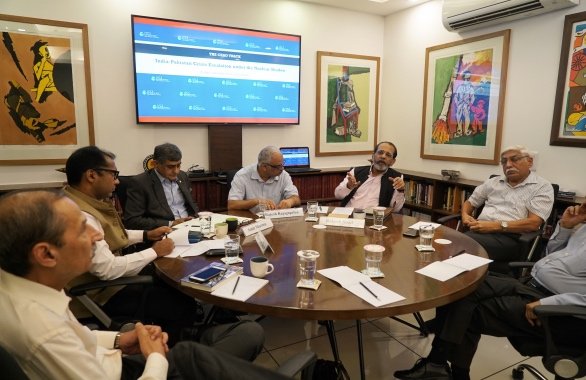
The Chao Track Policy Round Table | 'India-Pakistan Crisis Escalation under the Nuclear Shadow'
Panelists in conversation at IPCS on The Chao Track Policy Round Table themed 'India-Pakistan Crisis...

IPCS Discussion | Perspectives on China's Belt & Road Project
Dr Richard Ghiasy, Senior Fellow, Leiden Asia Centre, and Associate Researcher, Stockholm Internatio...
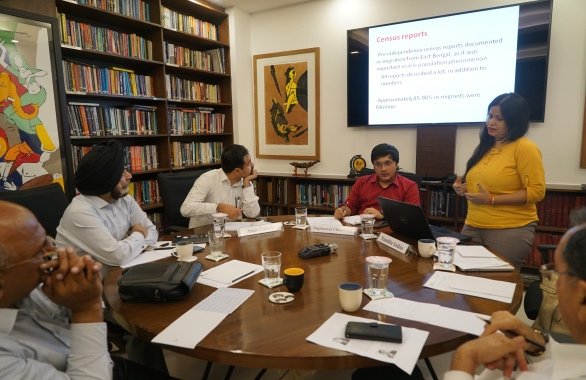
IPCS Discussion | Assam's National Register of Citizens (NRC): What Happened, and What Now
Angshuman Choudhury, Dr. Nandita Saikia, and Anas Tanwir explore the political, legal, and social as...

Book Discussion | 'K File: The Conspiracy of Silence'
Author and Srinagar-based senior journalist, Bashir Assad, discusses his recently released book...
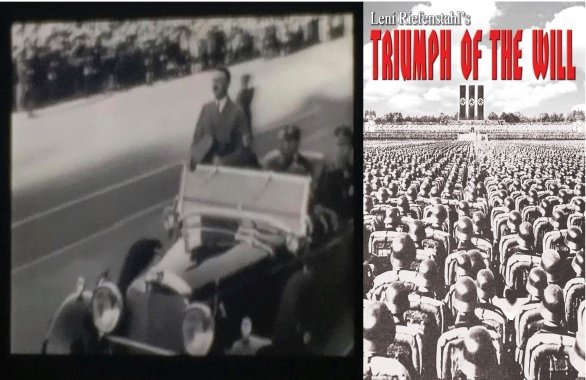
Reelpolitik | Triumph of the Will
On 13 September, as part of its Reelpolitik visual showcase series, IPCS screened 'Triumph of the Wi...
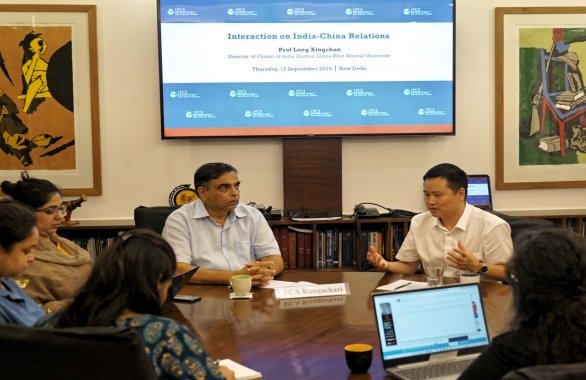
IPCS Discussion | India-China Relations
Prof Long Xingchun, Director, Center of India Studies, China West Normal University, in conversation...
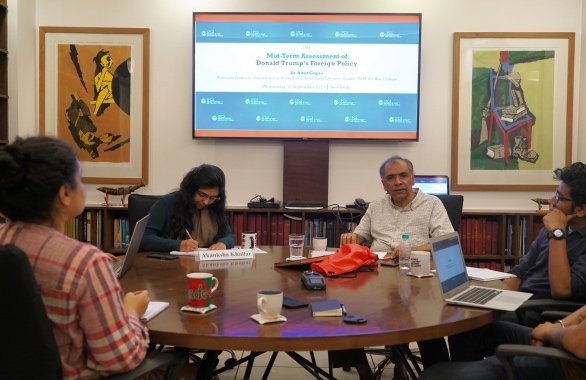
IPCS Discussion | Mid-Term Assessment of Donald Trump's Foreign Policy
Dr Amit Gupta, Associate Professor, Department of Strategy and International Security Studies, USAF ...
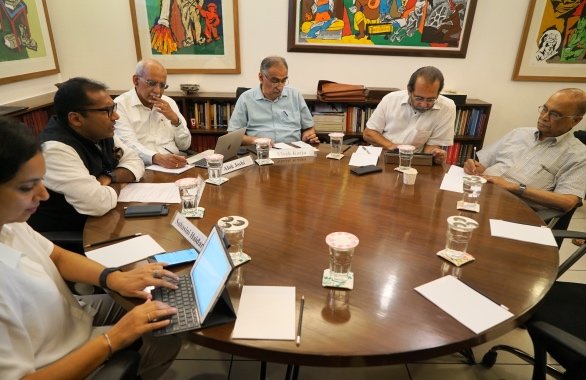
The Chao Track Policy Round Table | 'India Pakistan Dynamics Post Indian General Elections'
Panelists in conversation at The Chao Track-IPCS Policy Round Table...

Interaction with Sichuan University's Institute of South Asian Studies
The visiting delegation in conversation at IPCS on cooperation, competition and the India-China bila...
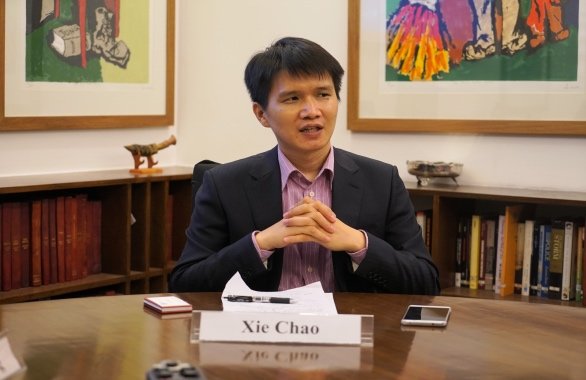
IPCS Discussion | 'India-China Rapprochement After Doklam'
Dr Xie Chao, Assistant Research Fellow, Institute for International and Area Studies, Tsinghua Unive...
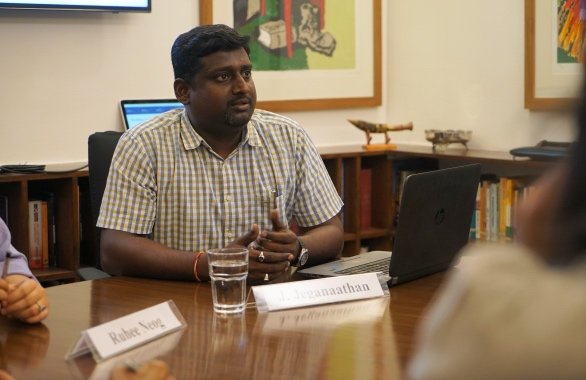
IPCS Alumni Seminar Series | The Return of the Bharatiya Janata Party (BJP) and the Future of Jammu and Kashmir: An Outsider’s Insider View
Dr J Jeganaathan, Senior Assistant Professor & Coordinator, Department of National Security Studies,...
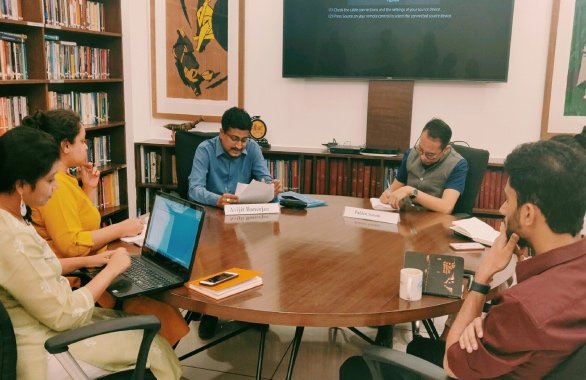
India and the Belt and Road Initiative: A Perspective from West Bengal
Dr Avijit Banerjee, Associate Professor and Head, Department of Chinese Language and Culture (Cheena...
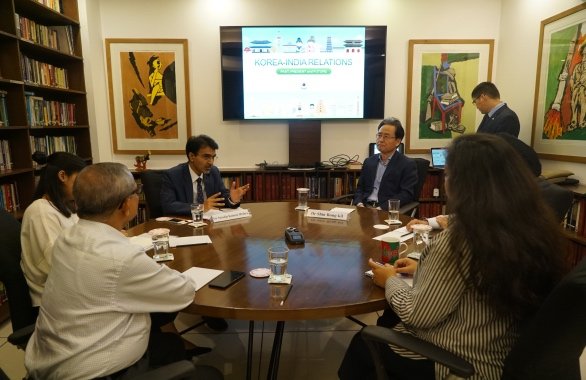
IPCS Ambassador Lecture Series | Korea-India Relations and Situation on Korean Peninsula
H E Dr Shin Bong-kil, Ambassador of the Republic of Korea to India, in conversation at IPCS...

Field Notes | 'The Red River of India: Impact of Open Cast Mining on Human Health and Environment in Dantewada District of Chhattisgarh'
IPCS Visiting Fellow Medha Chaturvedi presents her findings from her latest field trip to Chhattisga...
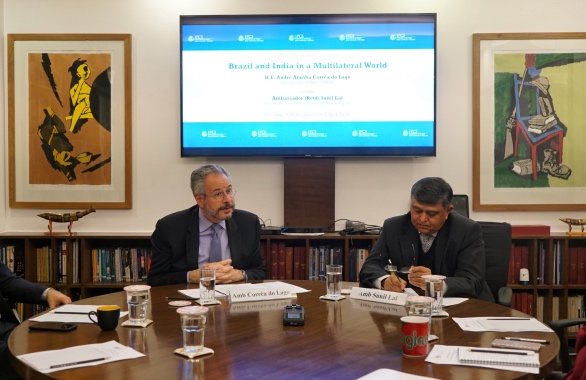
IPCS Ambassador Lecture Series | Brazil and India in a Multilateral World
H E Mr Andre Aranha Correa do Lago, Ambassador of Brazil to India, in conversation at IPCS...

Book Discussion | ‘In Their Own Words: Understanding Lashkar-e-Tayyaba’
Dr C Christine Fair in conversation at IPCS on her latest book, which investigates the LeT's structu...
-
14 Oct, 2026 · Ashutosh Nagda
-
12 Oct, 2026 · Tapan Bharadwaj.
-
31 Aug, 2026 · Srikanth Kondapalli
-
31 Aug, 2026 · Manpreet Sethi
-
20 Aug, 2026 · Swati Sood
-
09 Jul, 2026 · Dr Sandip Kumar Mishra




"Action stations on a war footing", Lt Gen Syed Ata Hasnain (Retd.) · 09 Oct, 2026 · The Tribune
"Asim Munir Gives ISI Chief 1 Year Extension", Rana Banerji · 04 Oct, 2026 · rediff.com
"Trump May Like Pak's Generals. But His Bureaucrats Have Other Ideas", Dr. Tara Kartha · 02 Oct, 2026 · NDTV
"Gandhi’s first fight was for the vote", Commodore C. Uday Bhaskar (Retd.) · 02 Oct, 2026 · The Indian Express
"The Indo-Pacific has gone quiet — not gone away", Lt Gen Syed Ata Hasnain (Retd.) · 28 Sep, 2026 · Firstpost
"Trump-Xi Summit: Wary ties and strategic limits", Commodore C. Uday Bhaskar (Retd.) · 28 Sep, 2026 · Money Control
"Iran To Saudi, Pakistan Is Now Fast Running Out Of Sides To Play", Dr. Tara Kartha · 28 Sep, 2026 · NDTV
"Shared history - Bhutan and Swat Valley have striking similarities and differences", Dr. T.C.A. Raghavan · 26 Sep, 2026 · The Telegraph Online
"Modi-Xi talks are back: Can leader-level diplomacy deliver more than handshakes?", Prof. Srikanth Kondapalli · 19 Sep, 2026 · Deccan Herald
"BRICS ticks the right boxes", Commodore C. Uday Bhaskar (Retd.) · 14 Sep, 2026 · The Tribune